Classes in Javascript
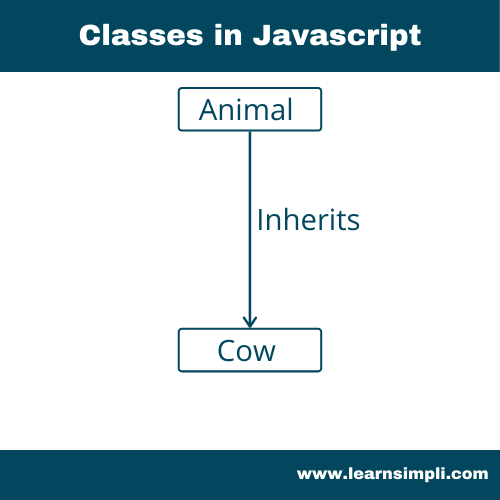
Introduction
- Classes are a template for creating objects
- They encapsulate data with code to work on that data
- The class syntax has two components: class expressions and class declarations
Key points
- Class declarations are not hoisted
- Trying to access a class before declaring, gives a ReferenceError
Class declarations
- One way to define a class is using a class declaration
- To declare a class, you use the class keyword with the name of the class
class Rectangle {\n
  constructor(height, width) {
    this.height = height;
    this.width = width;
  }
}
Class expressions
- We can also use class expressions to define our classes
- The name given to a named class expression is the class name
let Rectangle = class {
  constructor(height, width) {
    this.height = height;
    this.width = width;
  }
};
console.log(Rectangle.name);
// output: "Rectangle"
Class body
- The body of a class is the part that is in curly brackets {}
- This is where you define class members, such as methods or constructor
Constructor
- It is a special method for creating of class
- It initializes an object created with a class
- the super keyword is used to call the constructor of the superclass
Methods
- Methods can be added after the constructor method
- Methods can be called with class instance
class Person{
constructor(name){
    this.name = name;
  }

  getName(){
    return this.name;
  }
}

let john = new Person('John');\n
console.log(john.getName());\n
// John
Static methods and properties
- The static keyword defines a static method of a class
- Static methods are used to define fixed configuration
- Static methods are called without instantiating their class
- Cannot be called through a class instance
The static method with an instance
- Calling a static method with instance gives an error
- Error: john.getDepartment is not a function
class Person{
constructor(name){
    this.name = name;
  }
  static department = 'Software';
  static getDepartment = () =>{
    return this.department;
  }
  getName(){
    return this.name;
  }
}

let john = new Person('John');
console.log(john.getName());
console.log(john.getDepartment());
// john.getDepartment is not a function
The static method with class name
A static method can be called with class name
class Person{
constructor(name){
    this.name = name;
  }
  static department = 'Software';
  static getDepartment = () =>{
    return this.department;
  }
  getName(){
    return this.name;
  }
}

  let john = new Person('John');
  console.log(john.getName());
  console.log(Person.getDepartment());

//John
//Software
Public field declarations
- Public fields can be defined at top of the class body
- Public fields can be accessed from outside of a class
class Person{
salary = 8000;
constructor(name){
    this.name = name;
  }
}

let john = new Person('John');
console.log(john.salary);
// 8000
Private field declarations
- Private fields can be defined at top of the class body
- Private fields cannot be accessed from outside of a class
class Person{
#salary = 8000;
constructor(name){
    this.name = name;
  }
}

let john = new Person('John');
console.log(john.salary);
// undefined
Private field declarations
- Private fields can be defined at top of the class body
- Private fields cannot be accessed from outside of a class
class Person{
#salary = 8000;
constructor(name){
    this.name = name;
  }
}

let john = new Person('John');
console.log(john.salary);
// undefined
Creating subclass
- The extends keyword is used to create a class as a child of another class
- If there is a constructor present in the subclass, it needs to first call super() before using this
class Person{
salary = 8000;
constructor(name){
    this.name = name;
  }
  getSalary(){
    return this.salary;
  }
}

class Employee extends Person{
constructor(salary){
  super();
    this.salary = salary;
  }
  getSalary(){
    return this.salary;
  }
}

let john = new Person('John');
let stark = new Employee(6000);
console.log(john.getSalary());
console.log(stark.getSalary());
//8000
//6000
Superclass methods in the subclass
Superclass methods can be accessed with the keyword super
class Person{
salary = 8000;
constructor(name){
    this.name = name;
  }
  getSalary(){
    return this.salary;
  }
}

class Employee extends Person{
constructor(salary){
  super();
  }
  getSalary(){
  let sal = super.getSalary();
    return sal;
  }
}

let john = new Person('John');
let stark = new Employee(6000);
console.log(john.getSalary());
console.log(stark.getSalary());
//8000
//8000